2026 Why Animals Matter Workshop: Impact Report
SUMMARY
Why Animals Matters supports wider social and emotional learning.
Students showed empathy, perspective-taking, respect for boundaries, compassion, moral reasoning and agency.
Some teachers saw children beginning to extend empathy to people as well as animals.
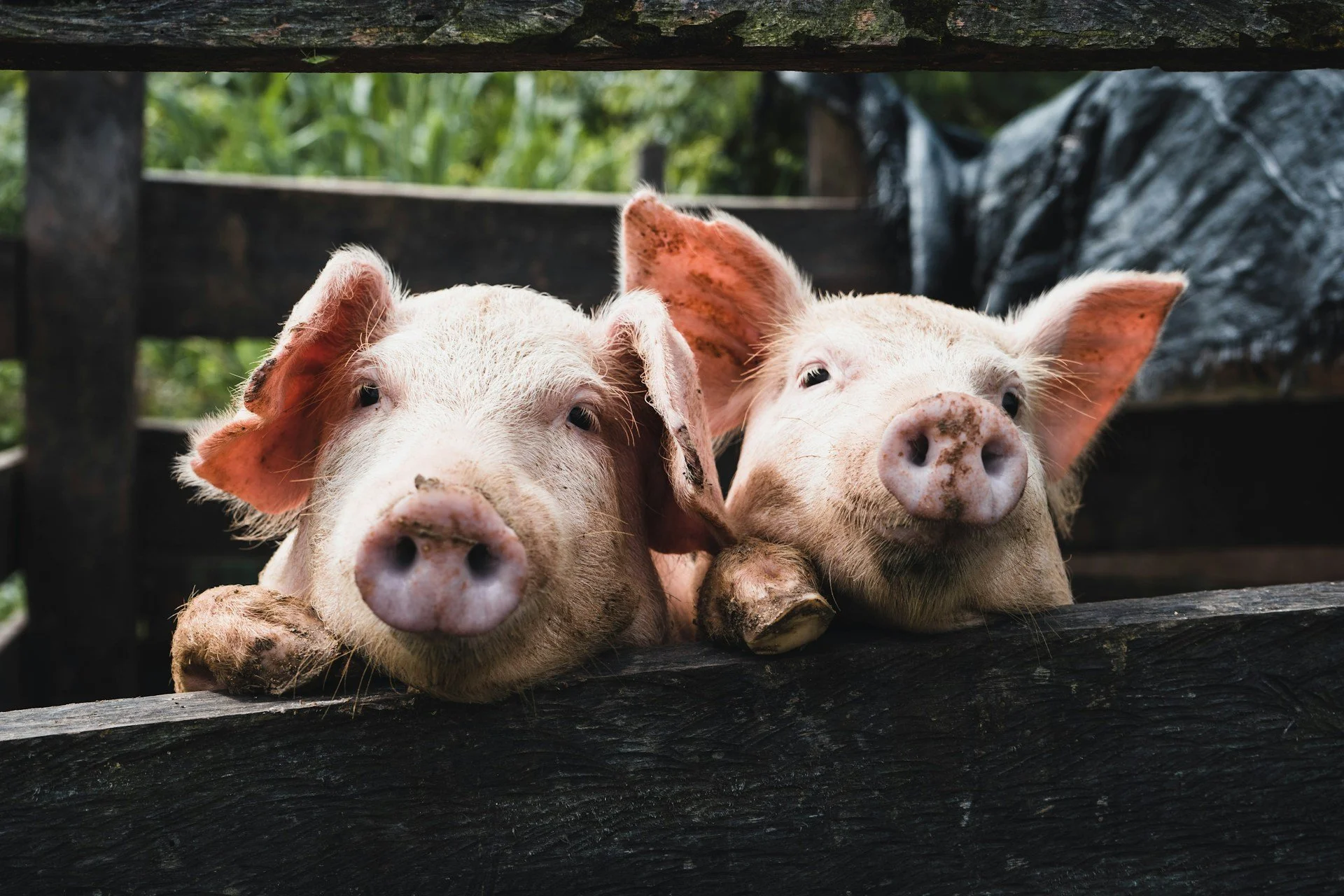
Using short films of real animals, Why Animals Matter helps young people build empathy, kindness and respect towards animals. It encourages children to imagine how an animal might feel in certain situations, to ask why so many people care so deeply about animals and to reflect on how their actions affect the natural world.
The workshop had a strong emotional impact on students and led many to say what they would do to help animals.
Many students recognised that animals have feelings, personalities, needs and boundaries. For some, this marked a definable shift from seeing animals as objects or possessions to seeing them as individuals deserving of care.
Teachers independently confirmed the engagement, describing an "emotional rollercoaster" of sadness, concern and joy, and children still talking about the animals after the session.
Approximately two-thirds of students named a specific action they intended to take, from caring more attentively for pets to helping injured animals and encouraging others to be kinder.
“The workshop provided a wonderful opportunity for our Year 5 and 6 children to develop empathy, critical thinking and communication skills. The engaging and age-appropriate activities encouraged thoughtful discussion and enabled the children to explore important themes with maturity and compassion. We would highly recommend this workshop to other schools.”
Mrs Kan, Whiteheath Junior School
Impact at a glance
100% of teachers (5 responding) rated the workshop Very Good or Excellent
100% of teachers would recommend it to other schools
100% of surveyed students described something new they learnt about treating animals with kindness and respect
75% of students identified that animals have feelings or emotions comparable to humans
65% of students identified a specific action they could take to help animals or nature
8% described persuading or encouraging others, an early sign of advocacy
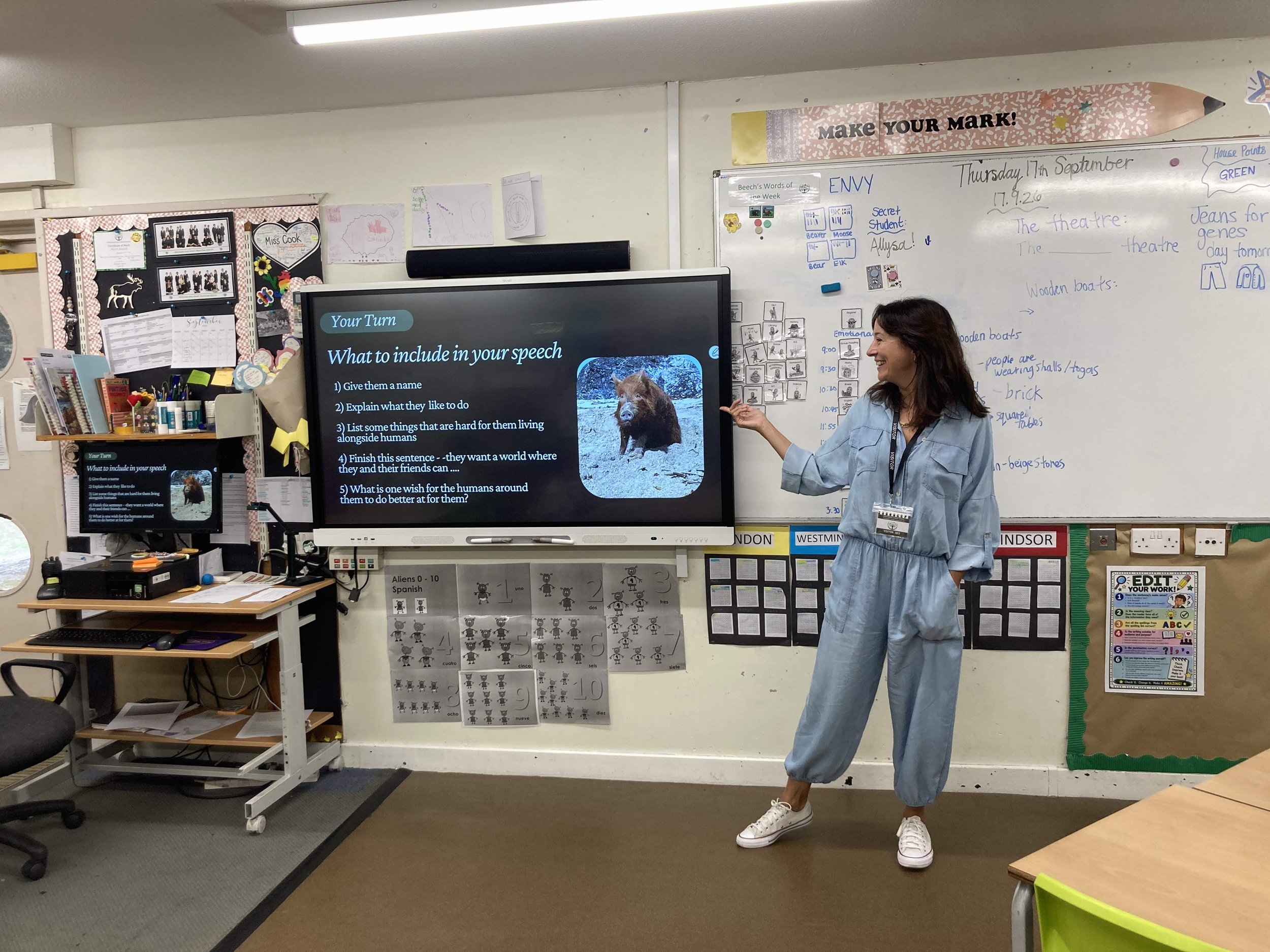
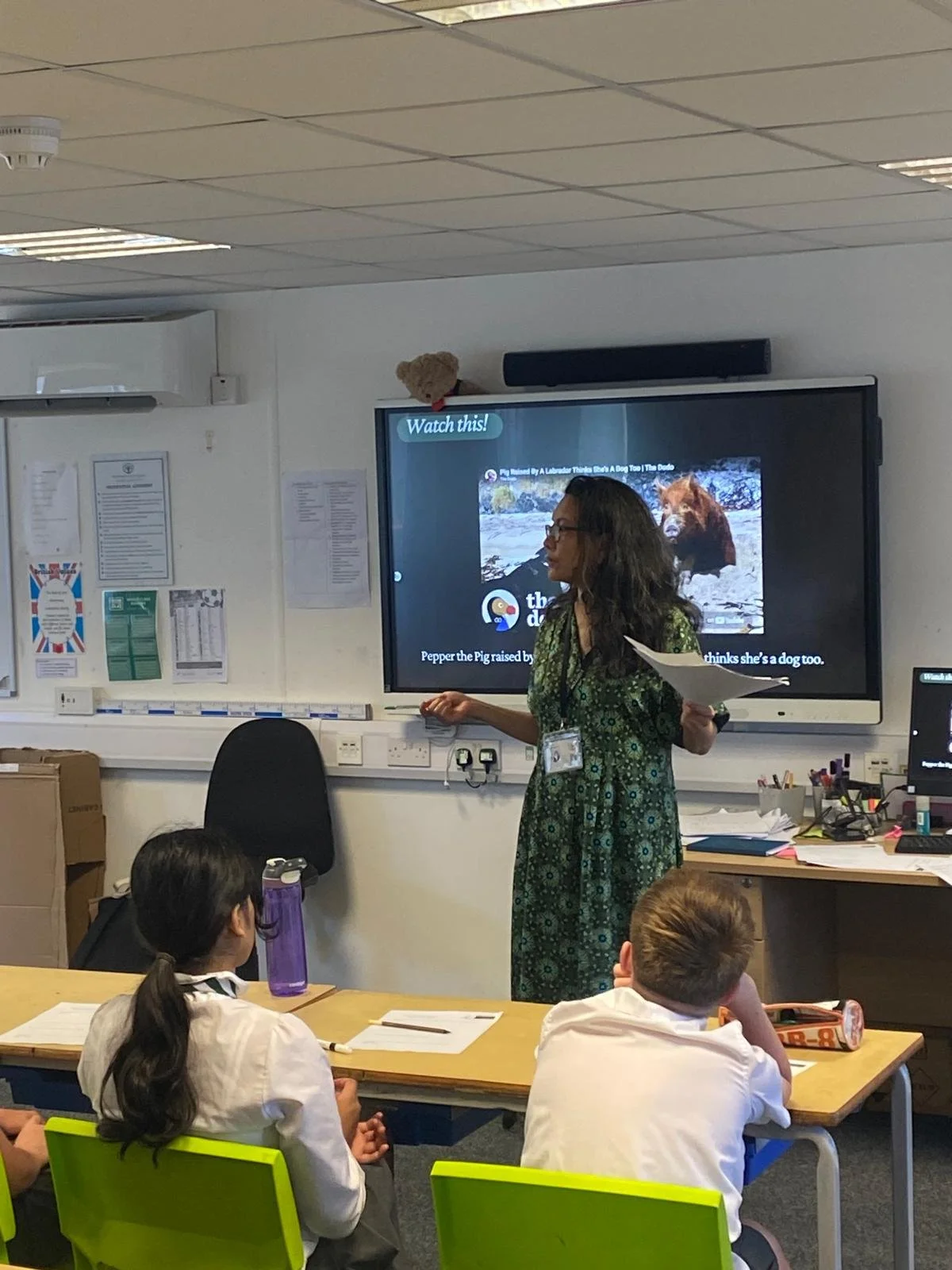
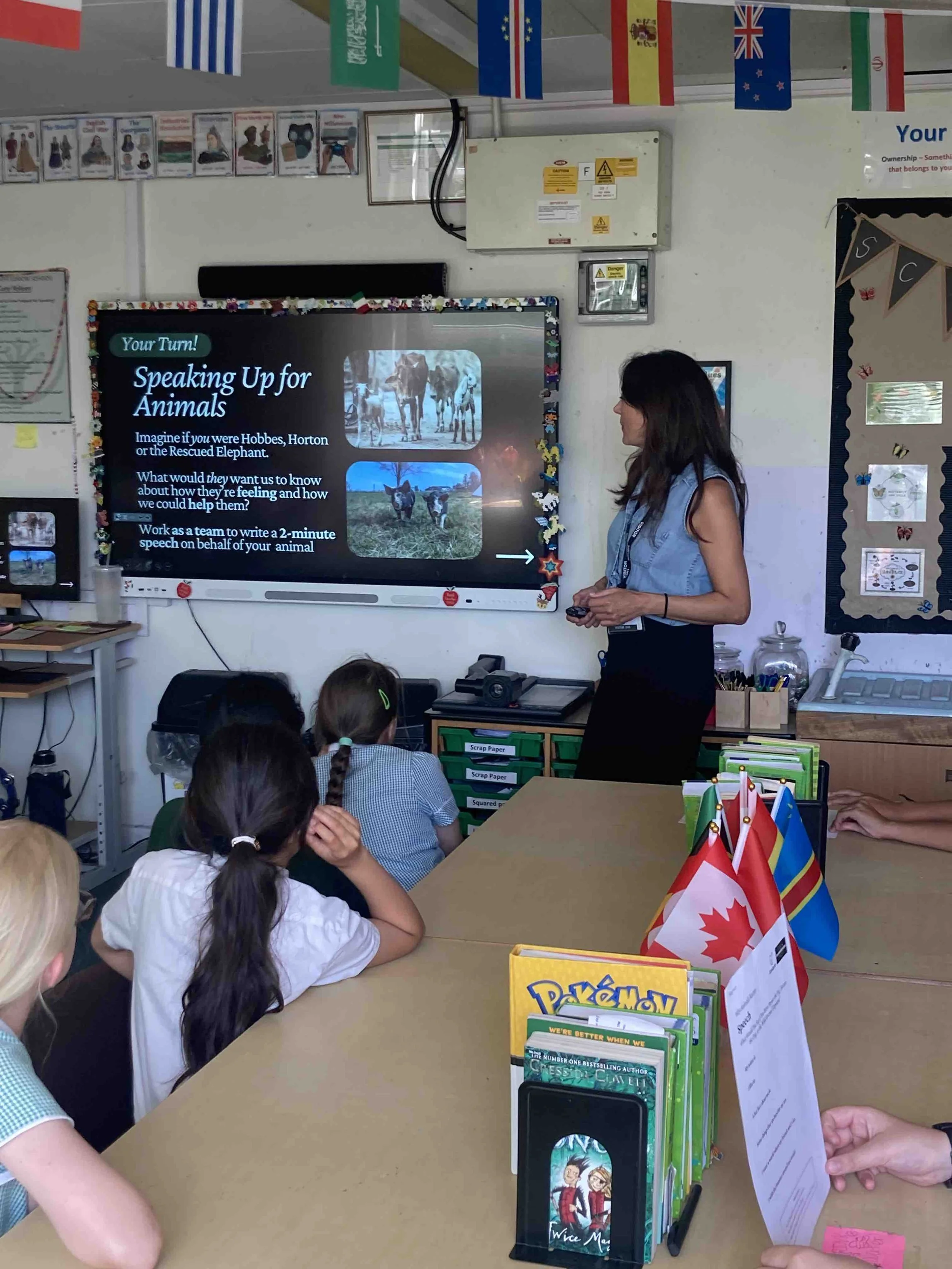
“The workshop was very engaging and pitched perfectly for the class. Many of the children were still talking about the videos and animals they 'met' after the workshop had ended. Not only did you share the importance of empathy towards animals, but also how crucial human connection, teamwork and resilience are - a life lesson for the children.”
- Anna Bryant, Year 5 Teacher
Key findings
Students began to see animals as individuals. Three-quarters spontaneously referred to animal feelings, and around half linked this to a responsibility to treat animals kindly. Students remembered specific stories, such as cows licking people as a sign of affection, which suggests the learning was anchored in memorable experiences. One student wrote: "Animals are more than what you think they are." Others wrote: "Animals are just as important as us" and "Treat animals the same way you want to be treated." Students also said animals should be given space and re-homed rather than "thrown out".
Teachers saw the same engagement in the classroom. All five described children completely absorbed by stories of individual animals, from sadness at suffering to cheering when an elephant was rescued from a sinkhole. One teacher noted children "didn't take their eyes off the screen". Teachers also credited skilled facilitation with turning emotion into thoughtful discussion.
Empathy translated into intended action. About 65% named a specific action: helping injured animals, feeding strays, caring more attentively for pets, treating animals more gently, or encouraging family members to change. One class discussed not drinking cow's milk after connecting the workshop to a student's family farm.
Our pilot showed what’s possible when children meet animals as individuals. Now we’re ready to bring the workshop to more schools and youth settings, and we need your help to do it.
If you’re a teacher or youth leader who would like to host a workshop, we’d love to hear from you. Visit GenEarth here.
If you’re an organisation or funder who shares our vision of a kinder, more compassionate generation, we’re looking for partners to help fund the roll-out. Email bel@theempathyproject.co.uk