Interview with filmmaker Tristan Copley-Smith
Filmmaker Tristan Copley-Smith and Bel Jacobs, founder of The Empathy Project and executive producer, discuss the making of The Empathy Project film

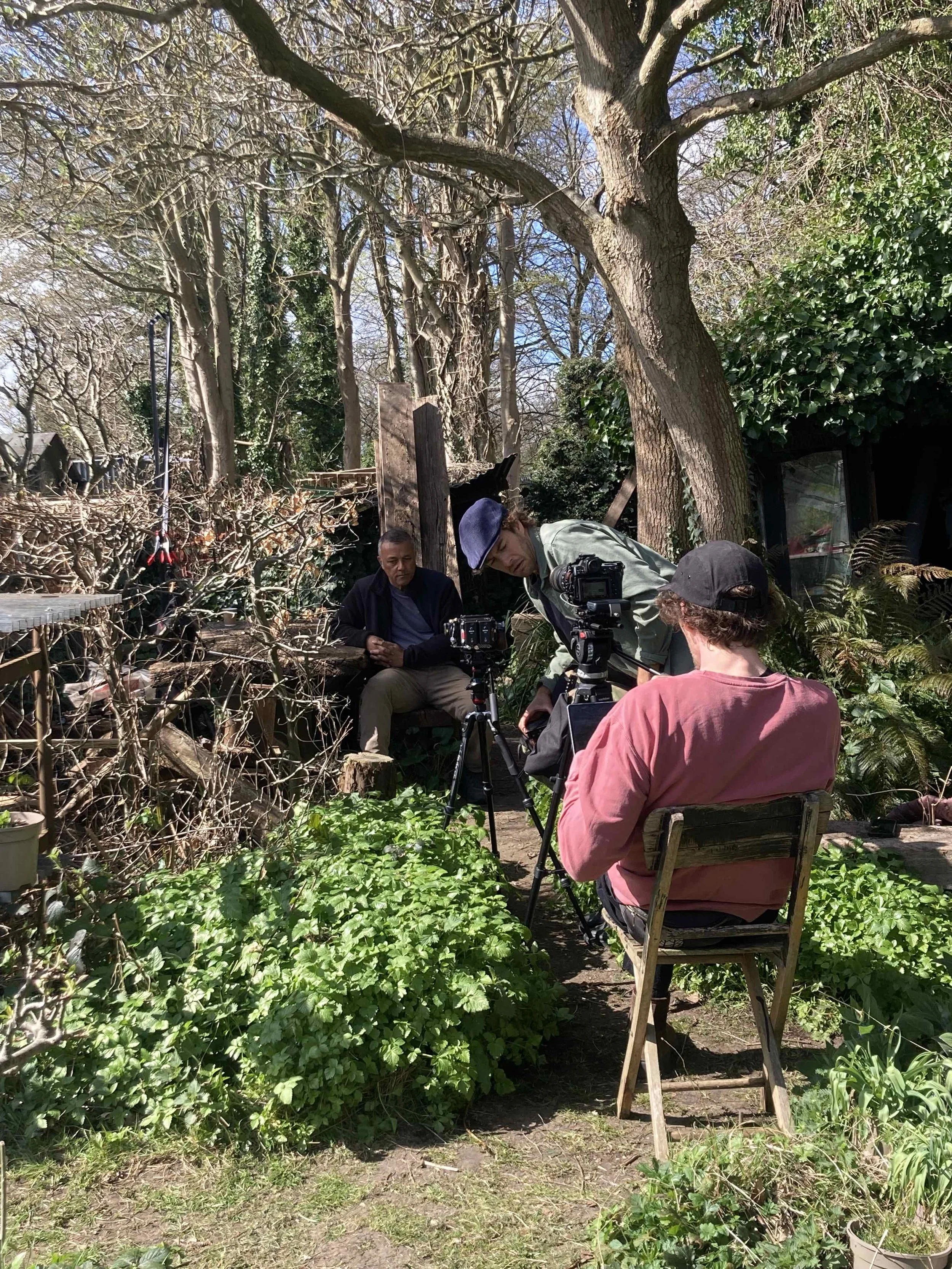
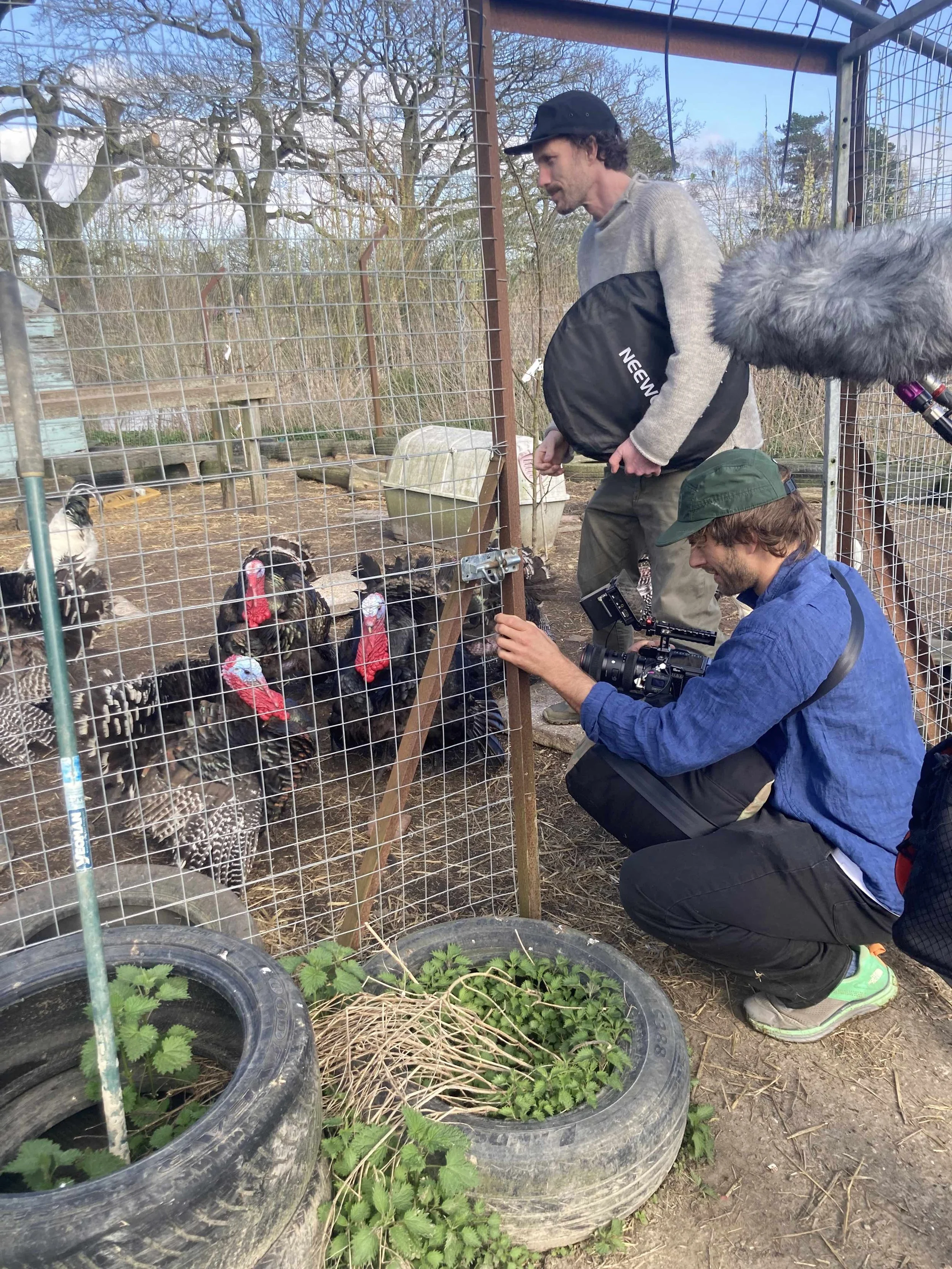
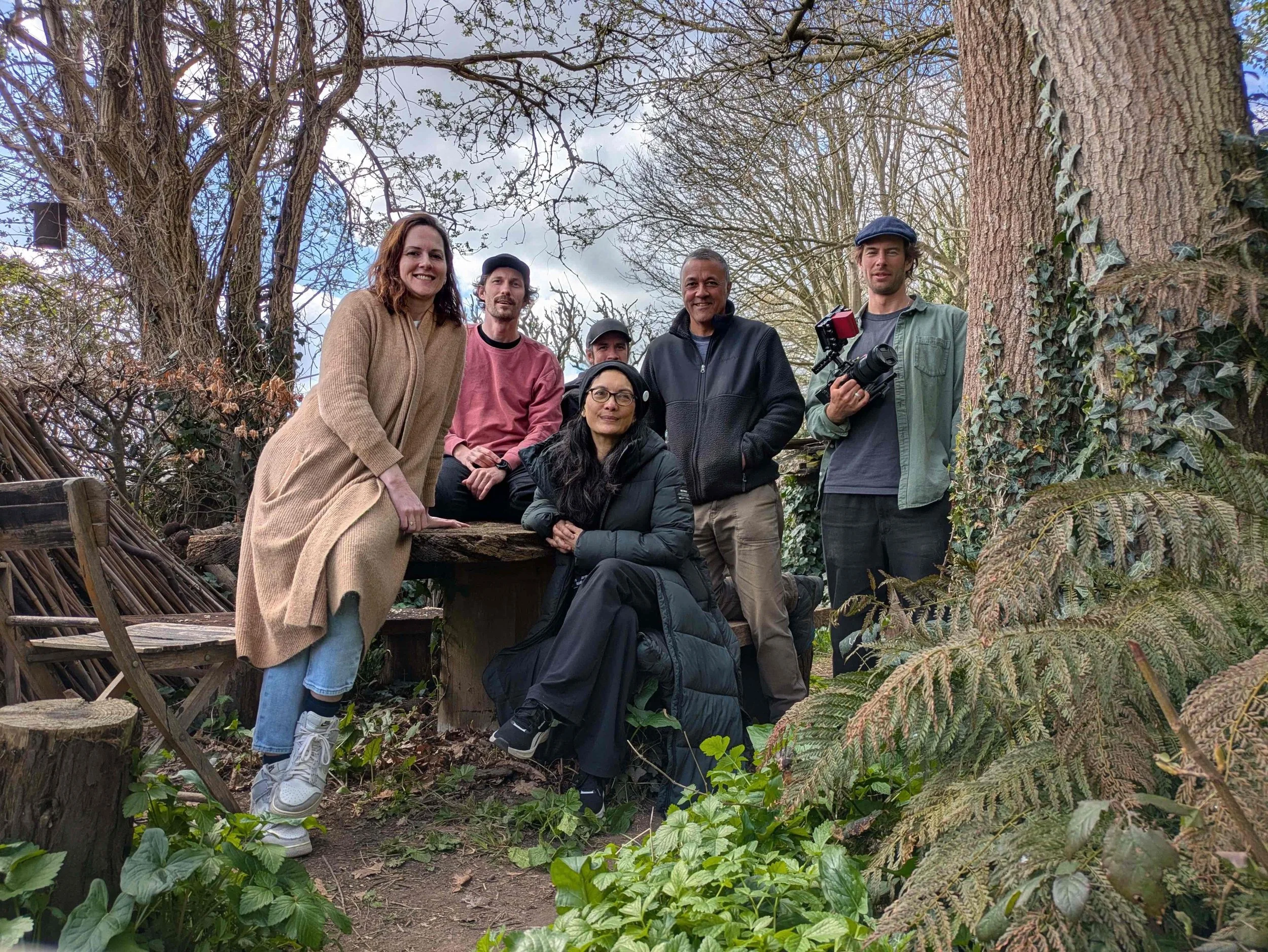
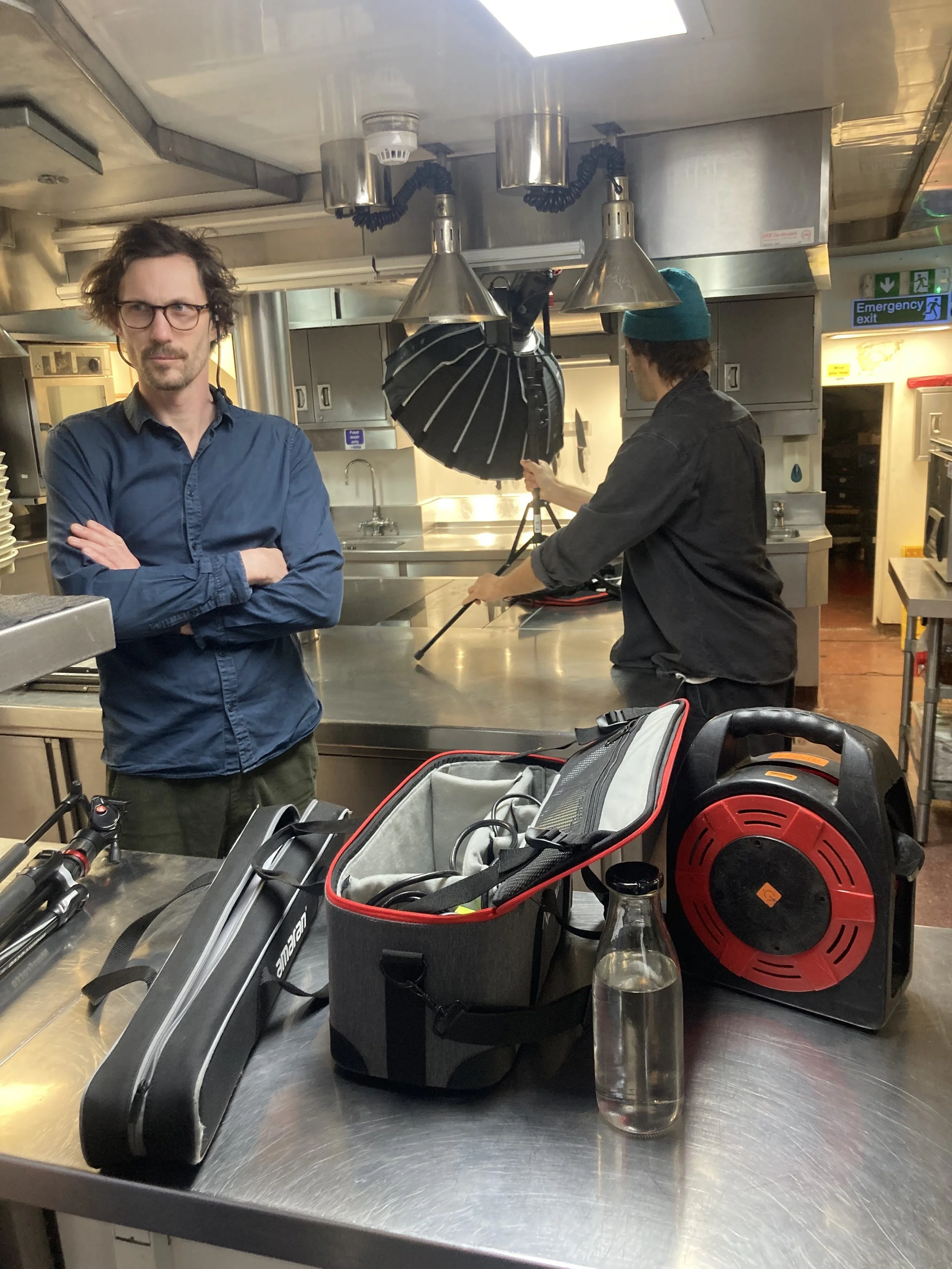
Bel: I came to you initally because I loved your focus on climate and biodiversity - but I also liked the fact that you weren't deep in the heart of the animal rights movement. Animal rights has its own understandably traumatic history which influences the way it delivers information. To reach our target audience - those who love animals but don’t know what they go through - we needed a director who could respond to the topic with a clear lens. Does that resonate?
Tristan: Yes. We talk a lot in our work about echo chambers and silos. There’s academic silos, movement silos, religious silos. It’s smart to go one level up from the very specific element of animal rights, to climate and nature-concerned people. Because when you broaden the scope [of your audience], you naturally become more inclusive. We weren’t interested in preaching to the choir. I felt like I could bring a fresh, cleaner state of a mind to this issue, because it's something I've thought about, but it's not something I've engaged with deeply. I had enough context to get it, but not so much that I couldn't relate to people on the other side.
It was very valuable to have a director who was able to offer reflections on the content. My concern emerged when I realised that animals are often not considered in conversations where they should be central; in conversations around climate and nature, for example, or social justice. For a society that calls itself animal lovers, that strikes me as unbelievably odd. The film is an attempt to reach some of those audiences, to address that absence of animals. Is this something you’ve encountered as well?
Yes, it was weird to me before I made the film; it’s become increasingly weird since then. It’s part of the silo-ing we spoke about and sometimes, we need to shake the walls so people can see how these issues are interconnected. That’s something I noticed about you, that you're very interdisciplinary. You think systemically. I like to think of myself as similar in that regard, because at the end of the day, these things are interconnected. The rising temperatures on our planet are a symptom of millions of interconnected issues that are all converging.
No aspect of life exists in and of itself without impact on everything else around it. The flip side, of course, is the sheer complexity of recognising systems.
We're taught in silos. From primary level onwards, education is a system developed to train people to enter capitalism and the industrial workforce. So it’s no wonder ….
But that also gives me hope, because if we're trained to think in one way, we can be trained to think in another. I was always impressed at the way you took my ramblings about animals and justice and turned them into a coherent set of themes. How did you do that?
I tried to understand human behaviour; I looked into human psychology and behaviour change design because I wanted to understand why people make big life changes. Essentially, that's what our film is looking at: what causes a schism in somebody's worldview that causes them to act, not only in a different way, but in a way that's almost counter to the way everyone else acts, in a way that’s as fundamental as what we put in our bodies to stay alive and also how we interact with animals. So I built my questions around that pathway without being too prescriptive. The objective was to uncover to what extent that research was true for the individuals we talked to, and where it wasn’t.
From your study, as an anthropologist, what creates change in people?
The most powerful form of change is lived experience; when you experience something that reveals a truth you may have been willingly or unwillingly denying yourself from seeing. Take someone who works in a place like Tyson in the US, who happens to go into the killing room. They see what they're perpetuating with their work - and they are shocked. That creates a schism. Alexis Gautier [chef patron of Gauthier Soho] talks about reading a book on animal sentience. Fundamentally, it's when an assumption we've been working with turns out to be fundamentally invalid - and we have the strength and the empathy to fuel the disruption that change will cause in our lives. And do it, despite that.
What was the film’s most challenging aspect?
Having clarity on what the end result might be. This often happens and, as a result, documentaries sometimes don't actually work out, because you don't get the material you need. I was wrestling with how to convert all these interviews into something that was going to give us room to explore the themes in the depth that we wanted to. It did take a fair amount of work in the edit.
I believe if we can fix our relationship with animals, we can probably fix almost everything else, from our destruction of nature to the climate, because animal agriculture contributes so heavily to both. And I think actually, if we fix the relationship with animals, we can start to reconnect with nature and each other in new, more peaceable ways. That’s a lot to communicate in a short film!
Yes, the topic is dense, and quite heavy. I really wanted to bring the audience through that, regardless of where they stood on the issue. Whether we've done that successfully or not is yet to be seen. From the feedback I’ve had so far, I think we’ve done a good job navigating the context, in a way that's engaging. I’m interested to see if that rings true in an audience.
We decided against using graphic scenes of violence towards animals, which are traumatising, but some of the subjects talk quite openly about events they’d seen: instances of terrible cruelty. In some ways, those moments are at the core of the film. Suddenly we go from discussing theoretical definitions of empathy, to this visceral response to these issues. But the content is difficult. What was it like editing that part?
Logistically, it wasn’t hard because it was clear where the beginning and end of those segments were. They were vignettes of difficult emotional experiences our subjects have been through, although obviously, the animals had an even worse time. It was the tweaking and repetitive watching I found difficult, because I'm a perfectionist in the edit. I was just sitting alone in my edit suite, doing that on repeat for days. When you repeatedly absorb darkness in that way, it does tend to have an impact.
Which bits did you find difficult to let go?
Since finishing the edit, there are a few parts I really wanted to have in there, but we just couldn't find the space. I'd loved to have included more about how animals experience emotions - and how they show emotions: the fact that pigs sing to their babies, that chickens purr when happy. Fleur Disney from Animal Aid talks about this, but we ended up having to cut her contribution which meant we lost that richness. The other thing I miss are the parts when Alexis and Dan Richardson [director, Food for Thought] talk about their euphoria after having decided to give up animal products. That was a really positive take to something that's innately driven by negativity in a lot of ways. But there are always trade-offs …
There’s that moment when Gautier speaks about the artichokes he’s preparing and he describes them as ‘la classe’.
Yes, and there’s a moment when he describes it as feeling as though flowers were coming out in his heart. Audiences might have found that a little cheesy but when a subject says something like that, it's beautiful.
Were there particular characters who resonated for you?
There's layers of experiences. First, speaking to the people and learning about their work from a distance; engaging with them initially. Then, there's meeting them in person and filming. Finally, there’s the edit. They’re all very different ways of engaging with a person. And my favorite part is being in person with them, because you’re getting a sense of who they are and their vibe. My personal favourite was Cleve West. He's a high level gardener but he’s also such a humble, honest man, and he clearly cares so deeply about this issue. He’s the most non-verbose person I've ever met but he says a lot with just how he is, his body language and his hands and his tone of voice and his face. Cleve is probably the most instantaneously likeable human being we encounter in this film.
There was something about Cleve … How do you feel making the film has changed the way you see animals?
It’s definitely changed the way I look at decision-making about food and just seeing animals as being entitled to dignity. As Laila Kassim [Project Phoenix] says in the film, we are programmed to see the world in a certain way. And when you hear someone ask, "Why do we not give animals dignity? Why do we not treat them as we wish to be treated ourselves?” - you can't really answer it. It just hangs there. Then you apply it to the way people are treating animals or how animal bodies are strewn within supermarket aisles. The systems we choose not to acknowledge become more defined. It’s like seeing more clearly.
John Berger wrote a pamphlet called Why Look at Animals in which he examines the evolution of our relationship with animals from kin to captive; how they are right in front of us, yet we barely see them. Once you understand that, your vision of the world and our relationship with animals shifts dramatically. Finally, what are your hopes for the film?
I hope it stays with people. That’s the hope that filmmakers often have about their work. There are films I keep coming back to, especially in relation to things that I do or decisions I make in my life. I hope people come back to this and consider what's being shared by people who clearly have wrestled very deeply with something that's fundamental but that we choose not to acknowledge very often.
So I hope they choose to acknowledge it more often. If it can have an impact on their behaviour or their decisions, that's delightful. Often, these things are only as impactful as people are open to them so I hope people come with openness and that the film stays with them as a result.
Tristan Copley Smith is a filmmaker, ethnographer, and sustainability strategist specialising in climate and social innovation. He has produced documentaries, journalism and research across biodiversity, carbon markets, and regenerative science, helping organisations understand complex systems and design narratives that create change. He holds a Master’s in Anthropology of Global Futures and Sustainability from SOAS, and is the co-founder of ventures including OSBeehives and Possible Studio. He has taught climate communications in the UK, Spain and US, published work in the Guardian and Huffpost and is an MIT Innovator Under 35. Tristan is passionate about building a brighter planetary future and crafting narratives to shift systems.