Could some reforms be strengthening the animal factory system?
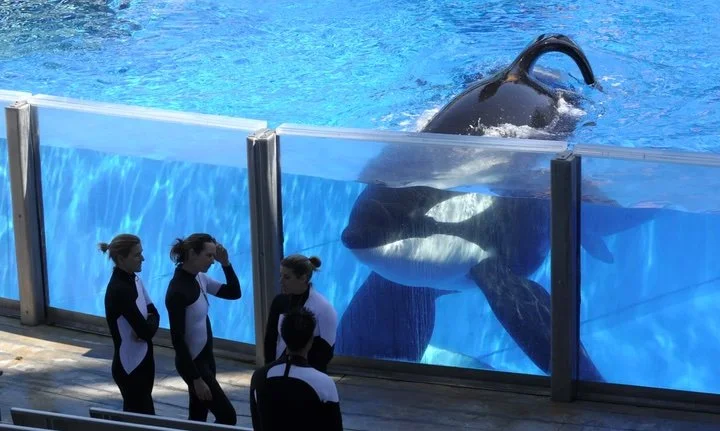
Tilikum (pictured in 2011) was at SeaWorld Orlando for 23 years. In 2010 he was responsible for the death of trainer Dawn Brancheau. Blackfish, the film about Tilikum, didn’t ask: “How should this captivity be improved?” It asked: “Should this be happening at all?” Photograph: Phelan M. Ebenhack/AP
This post was first published on July 15, 2026 by Natalie Braine, Narrative Power Lead at Project Phoenix. Subscribe to The Project Phoenix Substack page to get more articles like this in your inbox here.
Every day, people across the animal freedom movement are working hard to end animal factories – whether they’re factories for the research or ‘pet’ industry, hunting industry, farming industry, or the dozens of other types of factories that exploit and kill animals for profit.
Some are more vulnerable than others, making the possibility of ending them more likely in the coming years or decades. Others are so embedded in our economy and culture that it will likely take much longer than a generation to end them entirely. But regardless of the time frame, every campaign or initiative our movement runs is doing one of three things to the system that exploits animals:
Weakening it
Leaving it unchanged, or
Unintentionally strengthening it.
Not all wins are equal, even when they reduce suffering in the short term. Some reforms erode the system’s capacity to keep operating. Others improve conditions inside it, but leave the system itself more defensible, and therefore better able to adapt and survive (or even thrive).
Any freedom movement can lose strategic clarity when it focuses too narrowly on one measure of success. A campaign might reduce suffering now, reduce numbers in one part of the system, win a visible concession, or communicate a strong moral horizon, yet still fail to weaken the system over time. A movement’s ability to succeed is rooted in its ability to clearly determine which wins can chip away at a system’s legitimacy, and which ones might bolster it.
People working to end mass incarceration of humans face this same tension. Organisers at Critical Resistance, who work to end the prison industrial complex (PIC), distinguish between reforms that strengthen the machinery of imprisonment, and reforms that shrink its overall reach and can grow other paths to safety and wellbeing. They’re vigilant about which reforms can help create the long-term change that’s needed and which reforms might hinder it.
Specific changes – like closing prisons, and moratoriums on prison construction and expansion – have measurably reduced how many people are confined in the PIC. Other changes – like electronic monitoring, framed as a ‘better’ alternative to prison – have actually increased the reach of the PIC rather than weakened it, trapping more people into the system through state surveillance. The same goal – reduce how many people are incarcerated – can actually have the opposite result, depending on the type of reform pursued. One shrinks the system; the other gives it a new, more palatable way to expand.
In our own movement, we’re seeing the animal factory industry use certain reforms (like the Better Chicken Commitment) as a reason to expand the system even more. Regardless of whether the BCC pledge is directly driving that expansion, or just giving an ever-growing industry a convenient excuse, it shows how easily a reform designed to reduce suffering can be used to justify breeding and killing more animals overall. And how ‘improved’ practices can unintentionally make the system easier to defend, and therefore strengthen it rather than weaken it.
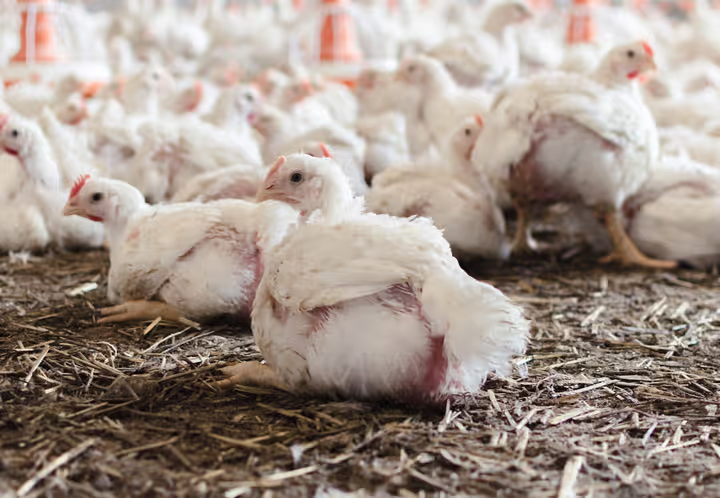
Certain reforms such as the Better Chicken Commitment are being used as a reason to expand the system even more.
Same aim, different strategies
The wins that most clearly weaken the animal factory system are often supported by a diversity of organisations from across the movement ecosystem, all campaigning on similar asks. For example:
Banning a part of the system – like the UK’s ban on live animal exports, ‘wild’ animals in circuses, or cosmetic testing on animals.
Limiting expansion of the system – like the work Communities Against Factory Farming are doing in the UK.
Keeping animals out of the system – like the campaign that repeatedly blocked permits for the world’s first commercial octopus farm, keeping roughly a million octopuses a year out of that system entirely.
A diversity of strategies are needed for any freedom movement to be effective. And what makes a strategy most effective is whether it erodes the system’s ability to keep operating.
This is sometimes described in social movement strategy as the difference between ‘reformist reforms’ and ‘non-reformist reforms’ (the latter also known as ‘structural reforms’ or ‘abolitionist steps’).
A ‘reformist reform’ improves or adjusts part of a harmful system, but leaves its underlying power intact. It may reduce suffering, but it can also help the system appear more legitimate or ethical.
An ‘abolitionist step’ (AKA a ‘structural reform’ or ‘non-reformist reform’) may still be incremental, but it can help reduce the system’s reach, shift power away from the institutions causing harm, expose deeper injustice, and build movement capacity for what comes next.
Mark and Paul Engler, authors of This is an Uprising, argue that the strongest demands are both practical and visionary: they address real suffering now while expanding what the movement and the public believe should be possible next.
They urge pragmatists to think bigger, and radicals to stay practical rather than pure.
In the animal freedom movement, we often judge demands by whether they sound ‘abolitionist’ or ‘welfarist’. But that binary isn’t always useful.
Achieving a ‘welfare’ demand can reduce suffering while also weakening the system that produces it. Or it can provide false reassurance to the public, reinforce unhelpful narratives, and help the system adapt.
Achieving an ‘abolitionist’ demand can expand the horizon of what people believe is possible. Or it can be merely symbolic if it alienates key audiences, doesn’t build movement power, or doesn’t create openings for further progress.
What matters more is whether a demand, and the story it is embedded in, challenges the legitimacy of the system and points towards greater change.
The strategic test
Four questions can help answer whether a reform, campaign or demand is ‘strategic’ and likely to weaken the animal factory system, or unintentionally strengthen it:
Scale – Does it reduce how many animals are bred, used and killed? Does it stop expansion or keep animals out of the system entirely?
Legitimacy – Does it expose the violence and injustice inherent in the system? Does it make the industry harder to defend in public?
Story – Does it frame animals trapped in the system as complex individuals, denied dignity and freedom? Does it encourage the public to ask: “Should this be happening? And how can we move beyond it?”
Movement power – Does it build organised pressure that outlasts a campaign, and strengthen the movement’s ability to act again?
What story are we telling?
The third question deserves more attention. It’s something advocates have the most control over, yet it can be the thing we’re least intentional about.
Take the campaign to end (CO2) gas chambers. The same ask can tell different stories, depending on how it’s framed:
“CO2 gas causes the greatest suffering” = CO2 gas is the problem; a different type of gas is the solution.
“Gas chambers cause immense suffering” = the method is the problem; a different method is the solution.
“Gas chambers are one of many ways this industry kills animals at an industrial scale” = the industry is the problem; gassing is the evidence.
By broadening how we frame an issue, we can influence how people understand it, and what changes they think are needed.
Is this a technical problem or a social injustice?
How we frame a reform shapes whether animal exploitation is understood as a technical problem to fix or a social injustice to end. Understood as a technical problem (i.e. the way animals are bred, confined or killed), improving the system makes sense. Understood as a social injustice (i.e. a violation of society’s values and of animals’ most basic interests), technical improvements become more complicated. They may reduce some suffering, but they also risk legitimising the system by treating it as a given: something to be managed and improved, rather than challenged and eventually ended.
Some injustices persist through becoming ‘improved’. An industry that looks like it’s ‘solving’ its own problem rarely gets asked to stop what it’s doing. A corporation celebrated for recycling the waste it produces obscures the fact that it still produces vast amounts of waste. Or a welfare label that claims to improve an industry obscures the fact that it still confines, mutilates and kills animals in their billions.
What can the de-carceration movement teach us?
Both the animal factory system and the prison industrial complex (PIC) rely on a similar story: that they exist purely for the public’s benefit, and that society couldn’t function without them. And both reduce complex individuals to a category that devalues them – a ‘resource’ or a ‘risk’.
Some prison reform narratives can unintentionally reinforce the idea that some people need to be confined and controlled, and only dispute how this is done. While some abolitionist narratives can spotlight the moral horizon, yet struggle to offer credible steps towards it.
Strategic campaigning fulfils three needs: it challenges the premise of a harmful system, while supporting changes that shrink its reach and build capacity for what comes next.
That means shifting the narrative: from controlling a ‘category’ to recognising individuals. This is what makes the system harder to defend, as it changes how the public perceives people with convictions, and therefore what the public will and won’t tolerate.
Two brilliant documentaries that add to this narrative shift are 13th and The Work. Both challenge the prison industrial complex, while skilfully reinforcing a freedom narrative. The Oscar-nominated 13th traces a direct line from slavery to mass incarceration, exposing how this isn’t a neutral, colour-blind system, but one designed to oppress and control particular ‘categories’ of people.
The Work goes much deeper, helping audiences emotionally connect with those confined in the prison system, framing them as people with convictions, rather than ‘convicts’.
Both have helped shape public conversation and given audiences an entry point into a difficult, and often controversial, topic.
Shifting the narrative for animal freedom
A similar narrative shift is needed for animal freedom. Some approaches risk reinforcing the narrative that the issue is how animals are treated and killed, encouraging the public to see this issue through a lens of: “How can this be done better?”.
Other approaches reinforce the narrative that animals are complex and unique individuals, challenging their commodification by encouraging people to ask: “Should this be happening at all?”.
But the same campaign ask can tell different stories. A campaign focused on reducing suffering can still expose the wider system. And a campaign that names animal freedom can still fail to shift the narrative if it doesn’t connect with where audiences currently are.
How we frame animals trapped in the system changes how the public perceives them, and therefore what they will eventually stop tolerating.

Oscar-winning film My Octopus Teacher helped shift the narrative about octopuses as unique individuals
Blackfish is a good example of this narrative shift in practice. Rather than focusing on tank size or living conditions, it focused on the psychological harm of those trapped in these aquatic prisons, told through the story of an individual orca – Tilikum – and his mental suffering at being separated from his family, and his resistance to his captivity. The film didn’t ask: “How should this captivity be improved?” It asked: “Should this be happening at all?”
After its release, SeaWorld lost roughly a million visitors in a year, had an 84% drop in its income, its share price fell by a third, and it ended its orca breeding programme entirely. The public no longer believed SeaWorld’s story about ‘happy, willing performers’ – and once that story splintered, the whole premise of this industry became indefensible.
The Oscar-winning film My Octopus Teacher and bestselling book The Soul of an Octopus have also helped shift the narrative about octopuses as unique individuals, and in turn helped build public pressure against farming them.
But effective framing and shifting the narrative are only part of what makes a system indefensible in the public’s eye. A structurally sound reform is the vehicle; a solid narrative strategy is the engine that drives it forward. Without the right vehicle, the most powerful engine goes nowhere.
Making systems indefensible
Both the de-carceration movement and the animal freedom movement highlight that reforms are vital, but not all incremental change moves us where we need to go. Some reforms change conditions without weakening the system in the long term. Some changes might even strengthen the system’s legitimacy and make it easier to defend.
The strategic test is a filter to apply before deciding an ask or beginning a campaign. It can help assess whether the intended change would: reduce scale, expose the system, tell a compelling and motivating story, and build power that outlasts the campaign. The ultimate question it poses is:
Would this reform make the bigger fight of animal freedom easier or harder in the long term?
And that final answer should be the decider on whether to back it.
History has shown us that unjust systems rarely end because they’re improved or managed better. They end because people organise to make them impossible to defend