Hearts in the Crossfire: The Shared Fate of Communities and Their Animals
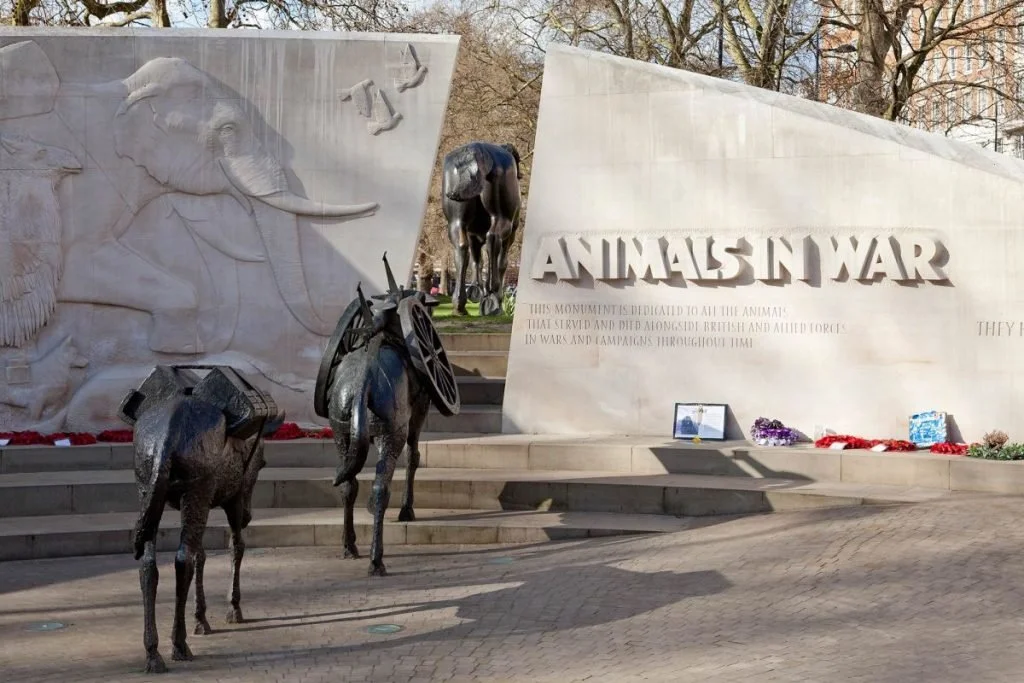
The Animals in War Memorial Status in London.
A viral video emerging from the war on Iran records a mother dog howling desperately for her pups, amidst the rubble of buildings. In Dubai, expats are leaving pets behind as they leave the state, to escape attacks from Iran. The image of a distressed lurcher, tethered to a dog waste bin, is an urgent reminder that animals suffer the consequences of war as much as humans but with far less agency. In this article, Jackson Zee, Armed Conflict & Disaster Frameworks Expert for international animal charity Four Paws, charts the mindset shift we need to occupy to protect some of the most innocent victims of wars and disasster. Follow Jackson on Linkedin here.
In the chaotic geography of armed conflict, our maps are etched with troop movements and the harrowing statistics of human displacement. Yet, beneath the headlines and the heavy toll of loss, there exists a silent population of millions whose suffering is woven into the very fabric of our communities.
These are the hearts in the crossfire—the companion animals, the working equines, and the weary livestock who, like the civilians beside them, are the ultimate non-combatants. To truly understand the scope of a crisis in the twenty-first century, we must move beyond sterile labels and recognize that animals are not just assets to be tallied, but sentient stakeholders in our shared survival.
The traditional framework of International Humanitarian Law historically categorizes animals as "civilian objects." While this provides a vital legal shield—prohibiting combatants from targeting animals or the infrastructure that supports them—it remains deeply limited. Treating a living being as an "object" implies that the primary concern is the financial loss to a human owner, rather than the intrinsic trauma of the animal itself. We believe a fundamental shift in perspective is required: animals must be recognized as stakeholders. A stakeholder is any being whose life is directly affected by the outcome of a situation. By this definition, every heartbeat in the crossfire has a stake in the peace, and their capacity for fear and pain demands a response rooted in compassion rather than simple property management.
The suffering on this forgotten front-line is both acute and multifaceted. When communities are forced to flee, the impact on animals is immediate and devastating. Companion animals, often considered members of the family, face heartbreaking abandonment when evacuation protocols fail to account for them. In rural areas, farmers who rely on livestock for food security and livelihoods are forced to make impossible choices, often leaving behind the very animals that represent their future survival. Working animals, such as horses and donkeys, remain essential for transport and daily life in disrupted zones, yet they are frequently left without veterinary care or fodder. Meanwhile, stray populations become increasingly vulnerable as their human food sources vanish, and wildlife habitats are decimated by the machinery of war.
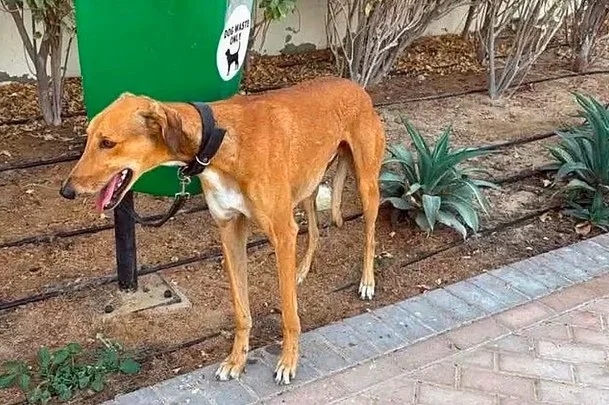
Distressed abandoned lurcher in Dubai. Picture: unknown.
Human and animal pain are never in competition; they are intertwined. For many people, an animal is the last living thread connecting them to the lives they were forced to leave behind—a psychological anchor in a sea of displacement. When we protect these animals, we are preserving the emotional resilience and the economic foundation of the entire community. Protecting these silent victims is also a prerequisite for a community’s recovery. The collapse of animal health infrastructure creates a vacuum that quickly fills with secondary crises, including public health threats that drain already broken resources.
This recognition requires a paradigm where preparedness and response go hand in hand, ensuring that animals are integrated into the very beginning of humanitarian planning and evacuation strategies. We must acknowledge that no community is truly evacuated until its sentient members are considered.
Ultimately, the measure of our humanity is found in how we treat those who are most vulnerable and least responsible for the chaos surrounding them. Animals are the innocent bystanders of our history, inheriting the most brutal consequences of decisions they did not make. By acknowledging them as stakeholders in our shared fate, we don’t just save individual lives — we uphold the principle that all sentience deserves protection.
We acknowledge that the fabric of the world we must eventually rebuild is woven from both human and non-human threads, and that no recovery is truly complete if the hearts in the crossfire are left behind.
Act now: Local dog re-housing group K9 Friends Dubai has been overwhelmed by calls about abandoned puppies and from owners looking to give up their animals. Follow it on instagram here.