Comment: The UN Said Children Must Be Protected From Animal Violence
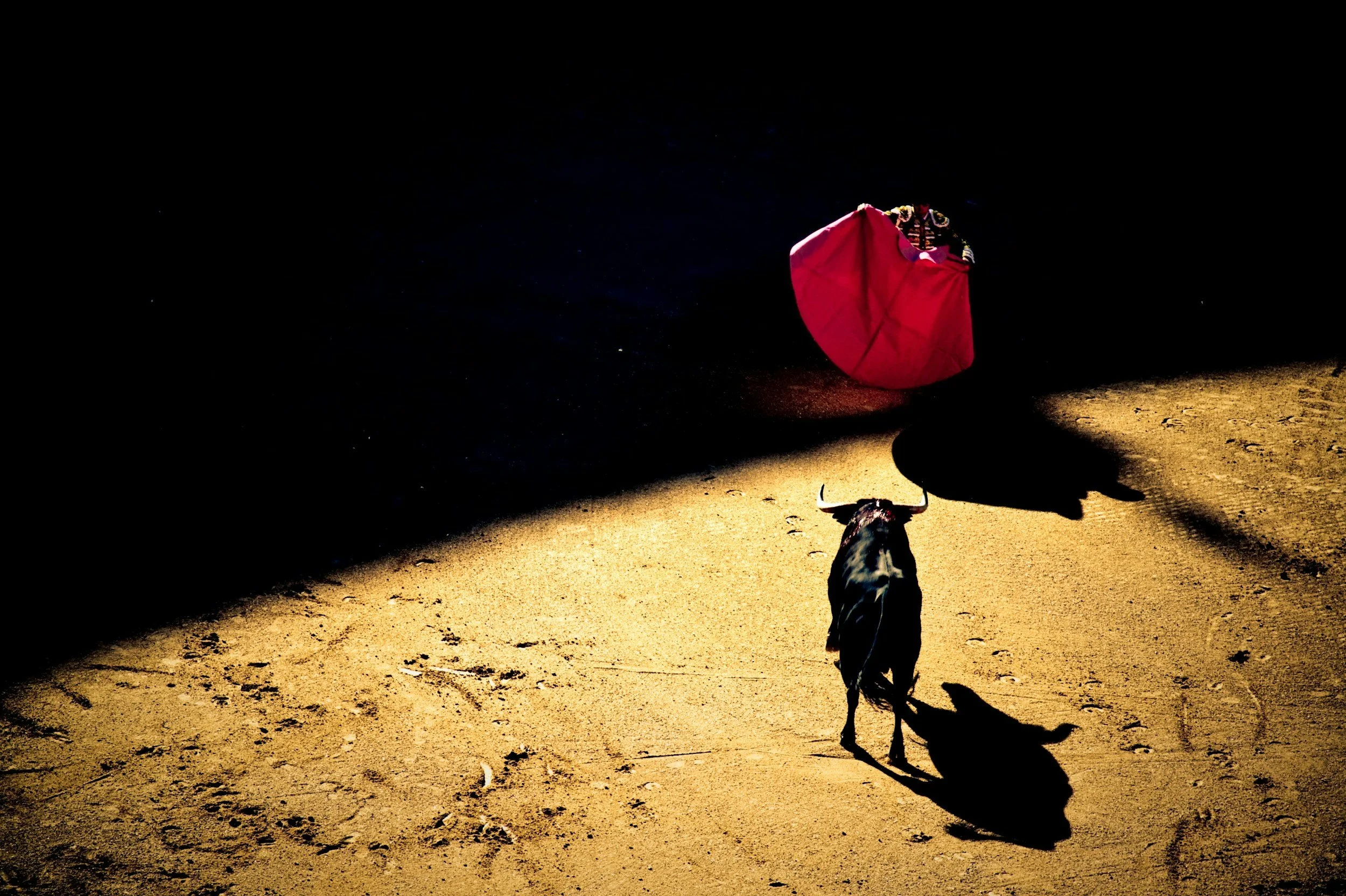
A family affair? Bullrings in Spain and Mexico still welcome children.
In September 2023, the United Nations Committee on the Rights of the Child released General Comment No. 26, which, for the first time, acknowledged the impacts on children when exposed to violence inflicted on animals.
The exact wording: “Children must be protected “from all forms of physical and psychological violence and from exposure to violence, such as domestic violence or violence inflicted on animals.”
The damage violence to animals can cause for children who witness it has long been flagged by psychologists. A review in the Journal of Adolescent Trauma concluded that “[w]itnessing violence predicts and increases a child’s engagement in maladaptive behaviours, including the perpetration of violence towards humans and animals. The mechanisms by which witnessing violence may lead to perpetrating violence involve desensitization, decreased empathy, learned maladaptive coping mechanisms and other learned behaviours ... potentially leading to violence against animals/or people.”
GC26 is a historical document. Yet, every day, children continue to see acts of cruelty and profound suffering inflicted on their animal kin - and repeating it. In June this year, a mother dog Wang Wang and her puppies were tortured to death by four boys, the oldest just 11. Her death was filmed and distributed online.
In this piercing post, published last year, campaign director of Sea Shepherd Valentina Crast asks why there has been inadequate uptake of a decision of such infinite potential. Read the original post here. Follow Valentina’s Substack here.
In August, 2023, the United Nations made history. During the 87th Session of the UN Committee on the Rights of the Child, it released General Comment 26, explicitly linking children’s rights to the treatment of animals. For the first time, the UN acknowledged that children must be protected “from all forms of physical and psychological violence and from exposure to violence, such as domestic violence or violence inflicted on animals.”
At the time, animal advocates celebrated this as a seismic shift. It was legally binding, affecting all 196 member nations! Many believed this would mark the beginning of the end for traditions of cruelty: bullfights, trophy hunts, stray dog culls, and the pilot whale slaughters in the Faroe Islands.
Two Years Later: Words Without Change?
Yet here we are in late 2025 and the images haven’t changed. Grindadráp hunts continue in the Faroe Islands. Bullrings in Spain and Mexico still welcome families. Trophy-hunting safaris advertise “family experiences.” In parts of Asia, the dog-meat trade remains public, even celebratory. The UN’s bold declaration has not yet transformed the reality for animals or for the children still being taught that violence is culture.
Governments, when challenged, often cite tradition or economic concerns. Even in regions with strong human rights frameworks, legislative reform has been slow or absent. These justifications show how quickly compassion can be sidelined when it conflicts with identity or profit.
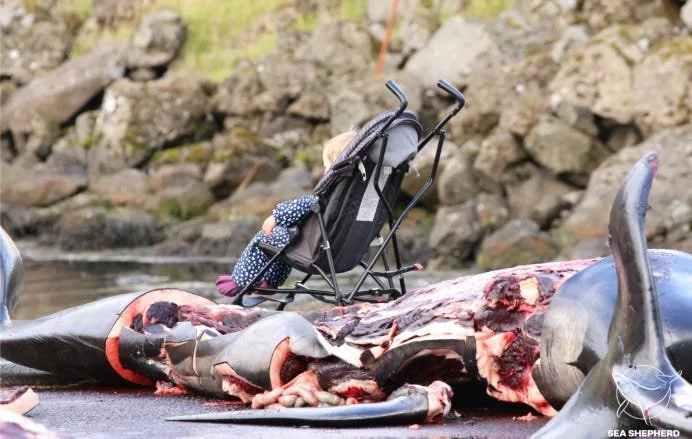
A child watches the ocean amidst the remains of a grindadráp. Picture: Sea Shepherd.
This gap between principle and practice is more than bureaucratic delay, it is a moral failure. Psychologists warn that normalizing violence toward animals can desensitize children, making them more accepting of aggression and cruelty in general. To ignore this is to risk perpetuating cycles of harm.
The UN’s General Comment 26 was not meant as a gentle suggestion. It is international law, binding on all member nations. If member states refuse to act, they are not merely neglecting animals, they are failing to uphold the rights of their own children.
Culture & Cruelty: The Excuse Has Expired
Let’s be blunt: traditions that brutalise animals and traumatise children are not sacred; they are relics of a less compassionate past. Calling cruelty “culture” doesn’t make it noble; it makes it wilfully ignorant or manipulative.
I have very strong feelings for animals and children, so please do excuse the very direct tone: no cultural label, old or even ancient, gives anyone the right to spill blood and to force children to watch. Absolutely not. We can debate it. But whoever is on the side of violence will always be on the losing team of this discussion. Culture is meant to enrich humanity, not to excuse harm. International law is clear: protecting children from exposure to violence is non-negotiable.
Consider the grindadráp in the Faroe Islands. Year after year, pilot whales are driven into shallow bays and slaughtered as children stand in the surf, their shoes and memories soaked in blood. In Spain and Mexico, families cheer while bulls are stabbed to death for entertainment. Trophy-hunting ads still boast about “family experiences” that involve killing majestic wildlife for sport. These are not proud cultural cornerstones, they are lessons in desensitisation.
If a tradition can only survive by normalising brutality in the next generation, it is not heritage; it is harm wearing a cultural mask. Cultures evolve constantly: foot-binding in China, duelling in Europe, and public executions across the world were once defended as proud customs. All were eventually recognised for what they were: violence disguised as tradition and abandoned. The same reckoning is overdue for animal cruelty paraded as heritage.
And let’s challenge the defenders’ favourite refrain: that shielding children is “censorship” or an attack on identity. Protecting kids from trauma isn’t censorship; it’s responsible parenting and moral progress. True cultural strength isn’t about clinging to every old practice, no matter how brutal; it’s about growing, adapting, and finding meaning without causing needless suffering.
The UN has already drawn the line. Every day we delay action, we teach our children that empathy is optional and cruelty is acceptable if it’s old enough to be called tradition. The excuse has expired and we should absolutely judge those who continue to hide behind it.