Recentring the Animal in Advocacy
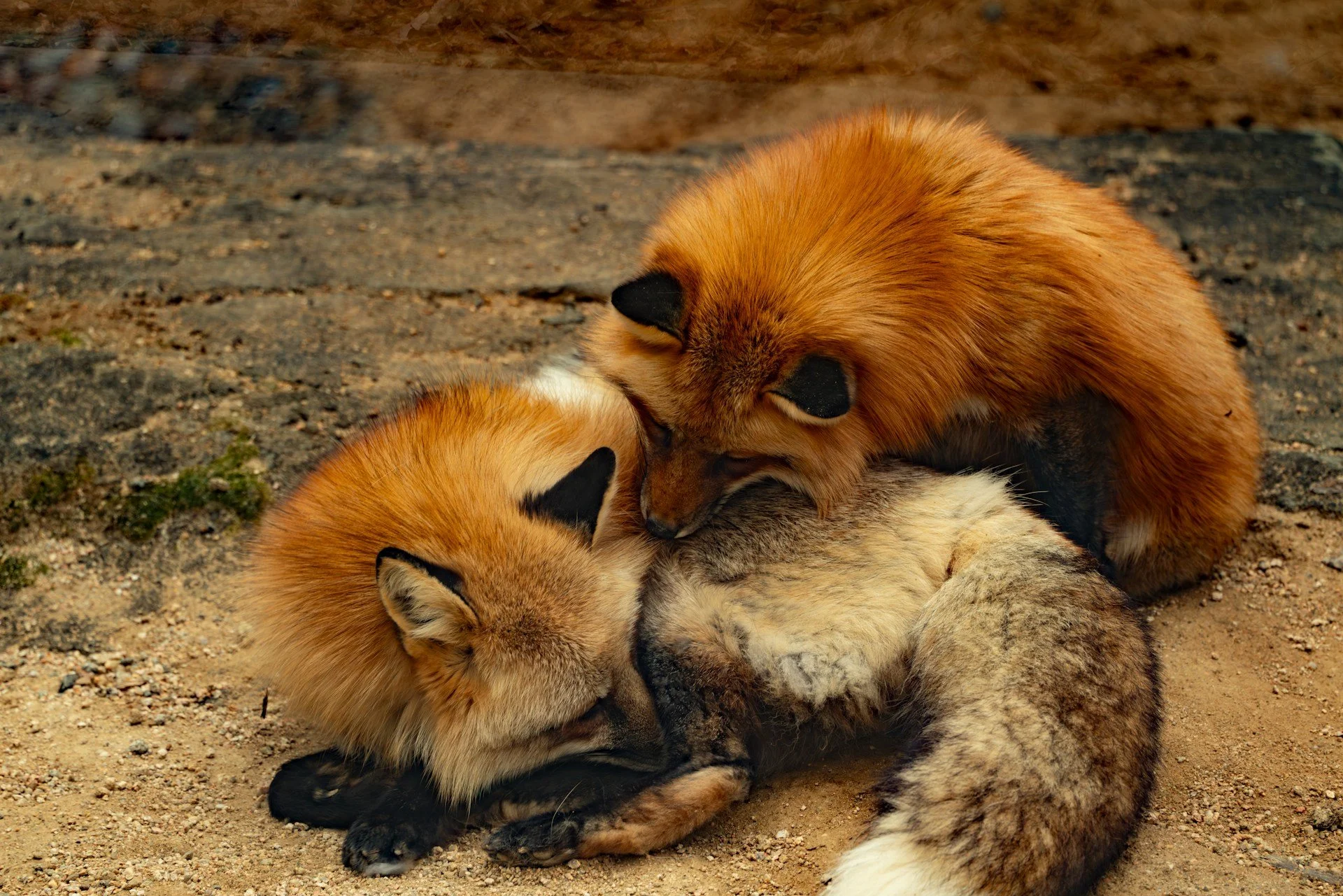
What might change if we shared stories of animal empathy and altruism; accounts that draw us closer to our animal kin rather than further away?
Do animal activists sometimes forget animals? In March, I presented a talk at the Vegan and Animal Rights Conference titled ‘Recentring Animals in Animal Advocacy.’ The title was meant to be provocative. Everyone at the conference cared passionately about animals. The talk's proposition was this: that, alongside the truth of what is happening to animals, we need to allow more space to let people know who animals are; reminding them that these are compassionate, empathetic beings in their own right and that, when laid alongside what really happens, we create the conditions for radical transformation.
For years, I stood in classrooms on behalf of a well-known charity, trying to start conversations that many adults still avoid; talking about animal rights. Some days were genuinely uplifting — when a child lingered behind to talk about how much they loved their dog, for example. Other days were harder. I remember a session where I spent 30 minutes explaining the difficult realities of factory farming. The first question? “So, miss … why do you want us to go vegan?”
Then one day, it clicked. I was talking through an image of a mother pig confined to her crate. I turned back to the class, saw only blank faces and realised: of course this feels abstract to them. These are sweet kids but they’ve never met a pig. They’ve never watched one sprint for joy or lean into a scratch. They’ve never seen how fiercely protective a mother pig can be, or how quickly they learn. I was asking them to care about suffering without knowing the one who suffers. To be frank, how could they?
Moments like this continue to emerge. Take the excitement when Veronika, a 13-year-old Swiss brown cow in Austria, showed the world she could scratch her back with a broom. Scientists were agog; those of us who have admired cows for years were less surprised (perhaps the bigger surprise was that she allowed to live to the age of 13). The most notable incident took place when a dear friend, a systems thinker, turned to me and said, with wonder in her voice, “I saw this video. Did you know that cows like to cuddle??” I paused before replying: “Yes, they do. When they feel safe.” But it was a heartbeat, when I realised that a respected colleague working to reconnect people with the natural world knew so little about one of its most significant inhabitants.
It isn’t a surprise. Few people today have contact with the animals they eat - or with the wild animals whose lands have been decimated by animal agriculture. The Guardian recently published an article on the loss of birdsong over the past 50 years. Thanks to shifting baseline syndrome, we barely noticed. But if this embedded ignorance is true, what are the implications for advocacy? Activists have become fluent in exposing cruelty. And by God, it’s necessary. But do we need to become just as skilled at reminding people that animals are individuals in their own right?
Let’s look at the possibilities when that happens. In January this year, a 10-year-old community dog named Orelha was tortured to death by a group of teenagers in the Brazilian beach resort of Florianopolis. His murder created a tidal wave of outrage. Brazilians took to the streets in their thousands, demanding #JustiçaPorOrelha. His story inspired a float in the Rio Carnival. Orelha’s little house has become a permanent shrine, decorated with flowers and cards. On news channels, pundits and journalists discussed the definition of psychopathy.
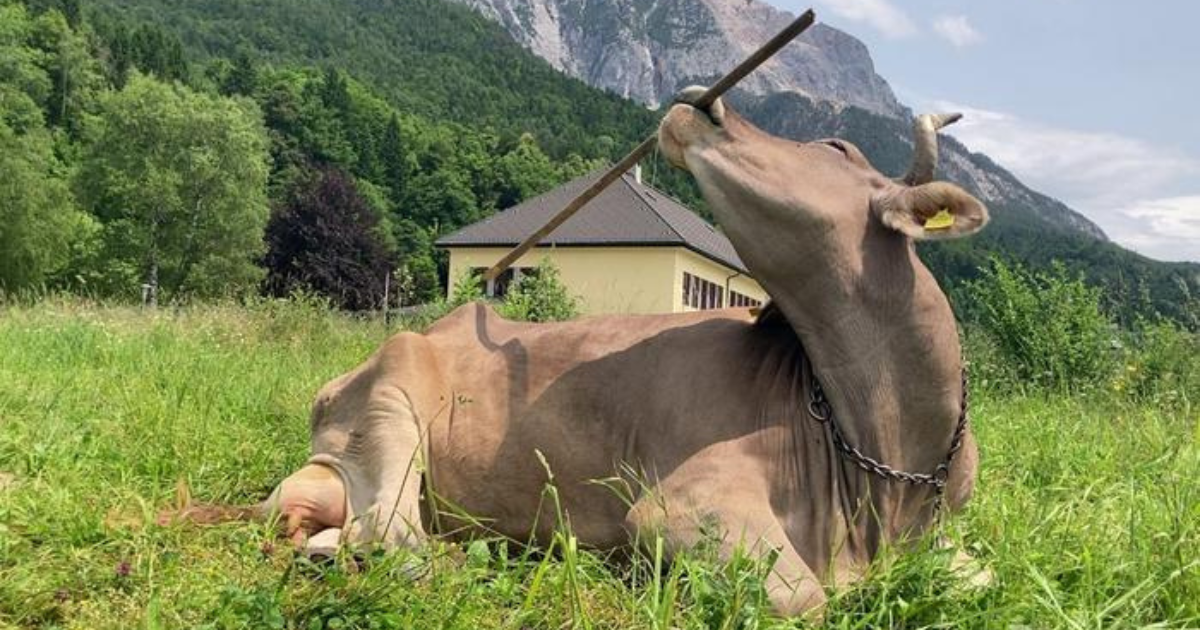
When Veronika, a 13-year-old Swiss brown cow in Austria, showed the world she could scratch her back with a broom, scientists were agog; those of us who have admired cows for years were less surprised.
What sparked that wave of sorrow for Orelha - even more than the way he was slaughtered - was that he was known and loved. In Florianopolis, people had videoed him, playing with other free-roaming dogs in the waves. He was caught, photobombing weddings or lying contentedly alongside sunbathers. In one clip, he stares serenely out to sea, as if he can’t quite believe his luck. Billions of animals are killed in equally terrible ways every day by industries that profit from their bodies. What if we could tell the story of a dairy cow, from birth and separation from her mother through to her early end; so that she is seen as an individual, as Orelha was? We would need to challenge the structures of legality, ritual, and social permission that enable to see one animals as food, the other as companion, but we might finally get closer to the words of Australian philanthropist and animal rights activist Philip Wollen: "In their capacity to feel pain and fear, a pig is a dog is a bear is a boy."
When we hear about animals, we often hear stories of awe and wonder. Earlier this year, a Bar-tailed Godwit - a type of migratory wading bird - made headlines when she flew 8,425 miles (13,560 km) without landing once for food, water, or rest; she was six months old. Foxes hunt hidden prey like mice under thick snow by aligning their bodies roughly to the north east, toward magnetic north; like small, furry compasses. Veronica can scratch her back with a broom. And awe is important. It reminds us how precious and extraordinary the world and her inhabitants are. But awe can also distance us by reinforcing feelings of difference. Awe places its subjects conveniently ‘over there’: being moved by a documentary about the world’s oceans rarely entails personal change. Perhaps this is why generations of nature enthusiasts have devoured Attenborough’s spectacular films without asking questions about the animals on their plates.
What might change if we shared instances of animal empathy and altruism; moments when animals have protected each other, helped each other, nurtured each other, grieved each other? Moments that we might recognise in ourselves? Take one example: an undercover investigator filmed a mother pig who had worked out how to open her crate. Rather than making a run for it, she released her sisters around her. That story never fails to take my breath away. Firstly, this act of strategic generosity would have been beyond my dogs - and they’re both as smart as whips. Secondly, time and again, animals demonstrate that they have a better instinct for what is right and what is wrong than humans do. That pig knew, in her bones, that she and her sisters shouldn’t be in cages. Nature tends towards balance; so do animals. Thirdly, billions of these sensitive animals, just like that pig, are lowered into gas chambers every year to endure agonising deaths
Animals being who they are, there is no shortage of accounts that might draw us closer to our animal kin. Academic Marc Bekoff dedicates his books to acts of reciprocity in animals, of empathy and grief, equity and forgiveness. In The Emotional Lives of Animals, he describes the efforts of Echo, a beautiful matriarch elephant, and her nine-year-old daughter, Enid, to help Echo’s newborn, Ely, who couldn’t walk. Despite thirst and hunger, Echo and Enid worked tirelessly together, tenderly nudging his little body each time he fell, until they got him to the safety of the water. Every mother will recognise her determination; every woman will recognise female solidarity in protection.
When his elderly timber wolf was about to be euthanised, Louis Dorfman from the International Exotic Feline Sanctuary recalled: “As I was holding her head in my hands at the last minute, she looked deeply into my eyes and, with great effort lifted her head to lick my face one last time. I will never in my life forget that last effort: a desire to let me know I was doing the right thing and she loved me for it.” Dorfman’s memory reminds me of the times my own little dog has given me single licks when I have assisted her in something.
Bekoff cites a famous whale rescue that took place off the coast of San Francisco, in 2005. A 50 foot, 50 ton female humpback whale was tangled in crab lines, making it impossible for her to swim. Despite extraordinary risk to themselves, divers worked tirelessly to release her. Once freed the whale started swimming in slow circles - before approaching each diver and nuzzling him. “It felt to me like [she] was thanking us,” said rescuer James Moskito. “Knowing [she] was free and that we had helped [her].”
Moskito was careful not to claim he knew exactly what the whale was feeling. But in the framing, he raised a key question: in wanting to connect with animals, do we assign them capacities they don’t possess? Do we anthropomorphise? Not as much as previously thought, says Bekoff: “We must decide for ourselves whether the rescuers were simply projecting feelings of gratitude on an unfeeling animal, or whether they intuitively understood the whale’s unfamiliar emotional gestures … But hard science is confirming what our intuitions so often tell us: animals express emotions in ways we are naturally able to understand.” (p62)
The problem isn’t anthropomorphism, points out Dr Joe Wills, lecturer in law at the University of Leicester. “It's ‘anthropodenialism’, the human tendency to ignore that we are animals and the other species are our evolutionary, biological and psychological kin. We share many capacities with the animals we exploit – our emotions, our vulnerability, our desires, our preferences, our relations of care – yet people chose to live in denial about these connections because they impugn present practices.” Impugn - and render untenable.
It’s not accidental that animal industries keep quotidian practices and those they wreck them upon behind both bars and walls. If a bacon-lover were aware that the pig they’re eating was one who could release herself and her sisters from their crates; who had had every baby taken from her; who had died in a gas chamber; it might change the way the flesh sits on the tongue. Setting the reality of who animals are alongside what they endure might finally ignite a sense of urgency that becomes unignorable.
What if thanking the divers was exactly what the whale was doing? If we truly grasped that degree of their intelligence, how might that change our concern for them? Would we stop filling their seas with poisons and plastics? Would we cut down shipping to mitigate noise pollution? End the climatic conditions that are heating their homes beyond endurance? Would we stop shooting them with exploding harpoons?
And also this: what worlds do we lose when we ascribe the animals less than they’re capable of? What worlds of kindness, of unity, of care for the natural world do we write out of existence? Worlds of awe, yes, but awe in its place, alongside action.
Seeing animals as individuals with their own hearts, minds, and souls “transforms our actions from mere obligation into heartfelt commitment,” wrote photographer Bjorn Persson. “Protecting animals becomes not just a duty, but a reflection of our shared humanity. True change begins within. Only then can our efforts be authentic and lasting, rooted in love and understanding, guiding us toward a world where animals are cherished and safeguarded as not just animals, but fellow beings on this planet.”
We need new ways of talking about animals. How do I describe the peace I feel when I hear my older dog simply drinking water? Or when her younger sister ‘boops’ my hand, while we’re in the woods (leaving a dot of cold and wet on my palm), as if to say: “Look. Look where we are. Together. I love you. Come smell this with me. Come chase this with me.” How do I describe what they mean to me? Sisters, daughters, guides, kin. Part of us as we are all part of them.
We are being invited to create new lexicons of compassion, new epistemologies of care, that describe the nuances of our relationship with animals; words (or sounds or gestures) that acknowledge their limitless enchantments, as well as the limits of our abilities to understand them. There is more going on inside those beautiful heads than we could ever imagine. We don’t have to be perfect. We just have to try - and in the trying, begin to heal fractured systems. Simply talking about them more, sharing both their joys and their devastations, will bring them into the foreground where they belong; whether that’s to a stranger at the bus stop or in a humane education programme in a school.
Daily, hourly, activists witness acts of unfathomable cruelty towards animals. Sharing stories of animal altruism is the happy part of this work; transforming with connection rather than outrage. Advocates are being called upon to become, with humility, the interface between humans and other beings. And by doing so, we reframe the movement from one of asceticism, grief and sacrifice to one that is broad and deep; joyful, engaged in community, inclusive. This is not about diet or lifestyle or perfectionism or maintaining the status quo for the hell of it. This is about love.